
Topical Map
Turn your SEO strategy into a clear page, blog, and content structure that shows what to create, improve, and connect next.
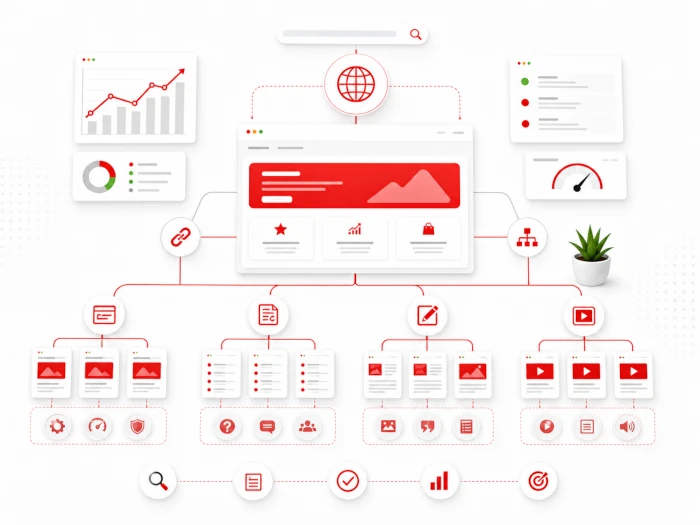
Topical Map Packages (In Short)
A Topical Map shows which pages, blogs, topic clusters, and internal links your website needs to build stronger SEO visibility.
Price
From €350
Recommended for SEO growth: €750
Advanced topical map: from €1,250
Best for
page planning, blog planning, content gaps, topic clusters, internal linking, and implementation order.
Flexible
Can be used after a Topical Authority Plan or as a practical roadmap before creating SEO pages, blogs, refreshes, or monthly SEO work.
Goal
You know your website needs more SEO content, but need a clear structure before creating it.
Need more details?
Scroll down to see details for Topical Map Packages and choose the next step for your website or webshop.
What Topical Map packages are available?
A Topical Map is available in different levels, depending on the size of your website, the number of topics involved, and how detailed the content structure needs to be.
A small website may need a focused map, while a larger website or webshop may need deeper topic clusters, page planning, and internal link architecture.
Topical Map Starter
€350
Topical Map Starter is for small websites that need a clear content structure before adding more SEO pages or blogs.
This is useful when your website has a few main services, but the page and blog structure is not clear yet.
This package can include:
- basic topic cluster outline
- main page recommendations
- supporting page suggestions
- first blog topic ideas
- simple content gap overview
- basic internal linking direction
- priority order for the first pages or blogs
- practical next-step recommendations
This is useful when the website does not need a full content architecture yet, but does need a clear starting point.
Topical Map Growth
€750
Topical Map Growth is the recommended option for businesses that want a practical SEO content map for the next stage of website growth.
This map gives you a clearer view of which pages, blogs, and supporting content are needed to build topical depth.
This package can include:
- full topical map for the main website topics
- main topic clusters and supporting subtopics
- page recommendations
- blog topic recommendations
- SEO Growth Page opportunities
- Existing Page SEO Refresh opportunities
- search intent direction by page type
- internal linking direction
- content gap mapping
- priority order for implementation
- 3-month content roadmap
This is the best starting point if the map will guide future SEO Growth Pages, blog writing, page refreshes, or monthly SEO implementation.
Topical Map Advanced
from €1,250
Topical Map Advanced is for larger websites, webshops, competitive niches, or businesses with several services, locations, categories, or audiences.
This is useful when the website needs a stronger SEO content architecture before ongoing SEO work begins.
This package can include everything in Topical Map Growth, plus:
- deeper topic cluster mapping
- service, location, product, or category cluster structure
- content gap mapping across several areas
- blog cluster planning
- keyword and intent grouping
- internal link architecture
- page priority by SEO and business value
- recommendations for pages to create, refresh, merge, or support
- 3 to 6-month content roadmap
This is the best option when the website needs more than a simple content list and requires a structured SEO roadmap.
Custom Topical Map — price on request
A Custom Topical Map is available for large websites, multilingual websites, webshops, multi-location businesses, or full SEO projects.
This is useful when the website has many services, products, audiences, languages, or locations that need to work together.
A custom map can include multilingual topic clusters, webshop category and product mapping, local SEO structure, content pruning recommendations, internal link architecture, and a longer implementation roadmap.
This is the best option when your website needs a long-term SEO content structure across many pages, topics, services, products, or markets.
What is a Topical Map?
A Topical Map is a structured SEO content plan that shows how the topics on your website should be organized.
It maps the main pages, supporting pages, blog topics, content gaps, and internal links needed to build stronger visibility around your most important subjects.
A topical map is not just a list of keywords.
It is a practical structure for your website.
It shows which topics need main pages, which questions need supporting blogs, which pages already exist, which pages are missing, and how everything should connect.
This helps you create content with purpose instead of guessing what to publish next.
Why does a Topical Map matter?
A Topical Map matters because SEO works better when a website covers topics in a clear, connected, and logical way.
Search engines need to understand individual pages, but also how those pages relate to each other.
Without a topical map, content can easily become random. Blogs may be published without supporting the main service pages. Several pages may target the same search intent. Important topics that competitors already cover may be missed. Some content may bring traffic, but still fail to support enquiries, sales, or business goals.
A topical map helps prevent this by giving every page a clearer purpose inside the wider SEO structure.
Who is a Topical Map for?
A Topical Map is for businesses that need a clear SEO content structure before creating more pages, blogs, or monthly SEO work. It usually follows a Topical Authority Plan, because the authority plan defines what the website should become known for, while the topical map turns that strategy into a practical page and content structure.
This is especially useful when the main SEO direction is already clear, but the next steps still need to be organized. The website may need more SEO pages, but the priority order is unclear. Blogs may be planned, but not yet connected to the main service pages. Several topics, services, locations, categories, or products may need to be grouped into a logical structure.
A Topical Map is also useful when existing pages overlap, internal links feel random, or content is being created separately instead of supporting topical authority. For webshops, it can help organize category pages, product groups, buying guides, blog content, and internal links.
This service helps turn SEO strategy into a usable content structure, so future pages, blogs, refreshes, and monthly SEO work follow a clear roadmap.
How does a Topical Map help with rankings?
A Topical Map helps with rankings by showing how to build depth and relevance around the topics your website wants to rank for.
When pages and blogs are connected properly, they can support each other instead of standing alone.
A strong topical map helps your website cover important topics more completely.
It can show where a main service page needs supporting blogs, where a category page needs product support, where an old page should be refreshed, and where internal links should connect related content.
This gives search engines more context.
It also gives visitors a clearer path through your website.
The result is a website that is easier to understand, easier to expand, and better prepared for long-term SEO growth.
What is the difference between a Topical Map and a Topical Authority Plan?
A Topical Map shows the practical page and content structure, while a Topical Authority Plan explains the wider SEO strategy behind it.
They are closely connected, but they are not exactly the same.
A Topical Authority Plan answers the bigger strategic questions: what should your website become known for, why does that topic matter, and how should SEO support business growth?
A Topical Map turns that direction into a practical structure.
It shows which pages, blogs, topic clusters, internal links, refreshes, and content gaps are needed.
In simple terms, the Topical Authority Plan gives the strategy. The Topical Map gives the content architecture.
What should a good Topical Map show?
A good Topical Map should show what to create, what to improve, and how each piece of content connects to the rest of the website.
It should make future SEO work easier, not more confusing.
A strong map usually shows the main topics your website should cover, the service pages or category pages that need to act as core pages, the supporting blogs or guides that should strengthen those pages, and the existing content that should be refreshed instead of replaced.
It should also show where internal links are needed.
That is important because internal links help search engines understand which pages are most important and how related topics connect.
The best topical maps are practical. They do not just give ideas. They show the order in which content should be created or improved.
How does a Topical Map reveal content gaps?
A Topical Map reveals content gaps by showing which important topics, questions, and page types are still missing from the website.
It compares what the website already covers with what should be covered to build stronger topical authority.
A content gap can be a missing service page, but it can also be a missing explanation, comparison, buying guide, FAQ, location page, category page, or supporting blog.
Sometimes the gap is not a completely new page, but an existing page that is too thin, too broad, or not connected well enough to related content.
This makes the next SEO steps much clearer. Instead of creating content based on guesses, the topical map shows where the structure is incomplete and which gaps should be filled first.
How does a Topical Map fit with SEO Blog Writing?
A Topical Map makes SEO Blog Writing more focused because it shows which blog topics support your main pages.
A blog should usually do more than answer a random question.
It should support a service page, category page, topic cluster, or customer decision process.
For example, if the main page is about Webshop SEO, the map may show supporting blogs about category pages, product descriptions, image SEO, product filters, duplicate content, and internal linking.
This helps blogs build topical authority instead of sitting separately on the website.
How does a Topical Map fit with Existing Page SEO Refresh?
A Topical Map can show which existing pages should be refreshed before new content is created.
Sometimes a website does not need more pages first. It needs better use of the pages it already has.
An existing page may target an important topic but lack depth, structure, search intent, or internal links.
The map can show whether that page should be improved, expanded, merged, linked better, or supported by new content.
This helps avoid creating duplicate pages while older pages remain weak.
How does a Topical Map work for webshops?
A Topical Map for a webshop shows how categories, products, buying guides, blogs, and internal links should work together.
Webshop SEO depends heavily on structure, because category pages and product pages need to support each other.
For a webshop, the map may show which categories need stronger pages, which subcategories should exist, which product groups need better content, and which buying guides or blogs can support product discovery.
It can also show how internal links should connect categories, products, related collections, and supporting content.
This is especially useful before starting Webshop Category SEO, Webshop Product SEO, or Webshop Growth Packs.
How does the process work?
The process starts by reviewing your website structure, main topics, current pages, and future SEO goals.
The aim is to understand what already exists, what is missing, and what should be organized better.
First, the main services, products, categories, locations, or offers are identified.
Then the related subtopics, customer questions, page types, and content gaps are mapped.
Search intent is considered so each page or blog has the right role.
After that, the content structure is organized into topic clusters. The final map shows which pages or blogs should be created, refreshed, connected, or prioritized first.
When is a Topical Map better than just writing content?
A Topical Map is better than just writing content when it is not clear which pages, blogs, or topics should come first.
Creating content without a map can lead to overlap, weak internal linking, duplicated search intent, and wasted effort.
This is especially important when a website has several services, a webshop has many categories or products, or blogs have already been published without clear results.
It is also useful when competitors have more topical depth, monthly SEO work needs a roadmap, or the budget needs to be used carefully.
A map helps make the next SEO steps more logical, focused, and cost-effective.
Can the Topical Map be implemented for you?
Yes, the Topical Map can be used as the roadmap for done-for-you SEO implementation.
After the map is created, the next step may be SEO Growth Pages, SEO Blog Writing, Existing Page SEO Refreshes, Webshop Category SEO, Webshop Product SEO, or monthly growth packs.
This means the map becomes a working SEO plan.
You can also use the map yourself if you want to write content in-house, brief a writer, or follow it through a coaching program.
What results can you expect?
A Topical Map gives your website a clearer content structure and a more focused direction for SEO growth.
It helps you understand which pages matter, which topics are missing, and how future content should connect.
A map does not guarantee rankings by itself.
The results come from implementing the map consistently with strong pages, useful blogs, refreshed content, internal links, and good technical SEO.
But without a map, SEO content can become random, disconnected, or inefficient.